

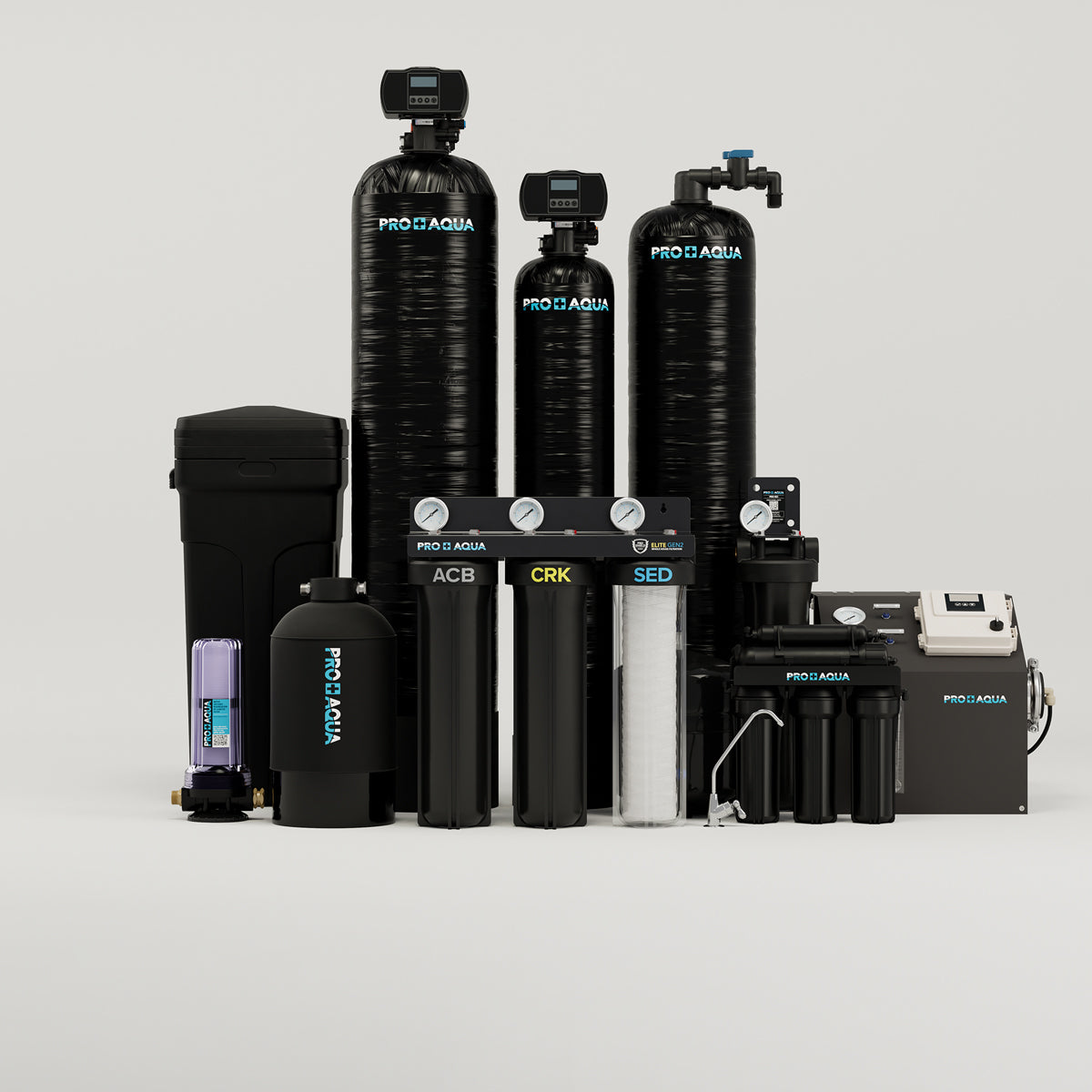


How to filter well water for a pool comes down to identifying what's in the water before it ever reaches the liner, since minerals that are barely noticeable at the tap can cause visible staining, cloudiness, or scale buildup once they're sitting in a chlorinated pool for weeks at a time.
Well water and municipal water behave very differently once chlorine and other pool chemicals enter the picture, which is part of why pool owners on well water run into problems that neighbors on city water rarely see.
The broader category of filtration systems for wells covers most of what a pool owner needs before a single gallon goes in.
Why Well Water Causes Problems in Pools
Municipal water arrives pre-treated and tested before it reaches a hose bib. Well water carries whatever the aquifer holds directly into the pool: dissolved iron, manganese, sediment, and hardness minerals that a city treatment plant would have already removed.
Once that water sits in a pool and mixes with chlorine, iron and manganese oxidize and turn visible, showing up as orange, brown, or even black-tinted water and staining along the pool walls and steps.
Sediment settles into corners and along the bottom, giving the water a persistent cloudy look no amount of extra chlorine actually fixes.
None of these problems announce themselves at the tap the way they do once the water sits in a pool for days at a time under sun and chemical treatment.
Testing Before You Fill
Testing well water before filling a pool matters as much as testing it for household use, if not more, since a pool holds thousands of gallons and concentrates whatever contaminants are present far more visibly than a glass of drinking water ever would.
A lab test identifies iron, manganese, and hardness levels specifically, which determines what kind of filtration setup actually solves the problem before fill-up rather than after staining shows up.
Comprehending water quality in general terms helps explain why this step gets skipped so easily: water that looks and tastes fine at the kitchen sink can still carry mineral levels high enough to stain a pool liner within days of filling.
A full test panel can also flag less visible contaminants like arsenic, and for households treating the same well for both drinking water and pool fill-ups, knowing how to filter arsenic from well water becomes part of the same conversation as staining and clarity.
Iron, Manganese, and Staining Risks
Iron and manganese are the two contaminants most responsible for pool staining on well-fed systems. Even relatively low concentrations, levels that wouldn't cause noticeable problems in drinking water, can leave rust-colored or black streaks once oxidized by pool chlorine.
Filtering these out before the pool fills rather than after staining appears is the more practical route, since removing iron and manganese stains from plaster, vinyl, or fiberglass after the fact is far more labor intensive than preventing them in the first place.
A whole-house or point-of-fill filtration setup sized around actual test results catches these contaminants before they ever reach the water.
Hardness and That Slippery Feeling
Hardness minerals, primarily calcium and magnesium, create a different set of problems: scale buildup on pool equipment, cloudy water, and rough deposits along tile lines.
Softening well water before it fills a pool reduces these issues, though some pool owners notice a slightly different feel to softened water at first.
That sensation is worth knowing about rather than second-guessing.
Our page on water feels slimy explains why properly softened water sometimes feels different against skin, a texture change rather than a sign of a problem, and one that pool owners filling with softened well water sometimes ask about after their first swim.
Filter Media and Replacement
Whatever filtration setup handles the fill water, the media inside eventually needs replacing, and the type varies depending on what's being targeted.
Sediment cartridges, carbon media, and iron-specific oxidizing media all wear out on different schedules depending on how much contamination they're pulling out of the water.
Our breakdown of common replacement water filters covers the different cartridge and media types in more detail, useful background for anyone maintaining a filtration setup that handles both household water and periodic pool fills.
Knowing how to change a well water filter on a consistent schedule keeps that same setup performing well at the tap and at fill-up alike.
Building a Pre-Fill Filtration Setup
A setup built specifically for filling a pool from a well typically starts with sediment filtration, moves through iron and manganese treatment if a test confirms those contaminants, and finishes with softening if hardness levels warrant it.
The exact combination depends entirely on what a specific well is producing, which circles back to why testing has to come before equipment selection rather than after.
Homes that already run whole-house filtration for drinking and household use usually have most of what's needed already in place.
Pool fill-up simply draws from the same treated line, meaning the investment in household filtration pays off twice: once at the tap, and again every time the pool needs topping off or a full refill.
Weighing the Real Cost of Skipping Filtration
Staining a pool liner or plaster surface after an unfiltered fill costs a lot more to fix than filtering the water would have cost upfront.
Stain removal treatments, acid washes, and in severe cases resurfacing all run well past what a properly sized filtration setup costs to install, and none of those repairs guarantee the staining won't come back on the next fill if the water still isn't being filtered.
That math is part of why we push pool owners on well water toward testing and filtration before the first fill rather than after the first visible stain.
A system sized correctly from the start protects the investment already made in the pool itself, and it keeps every future top-off or refill from reintroducing the same problem.
PRO+AQUA has worked with well owners long enough to know that preventing a stain costs a fraction of removing one.
Reach out to us if you'd like help figuring out what your well water needs before your next fill.



Leave a comment
This site is protected by hCaptcha and the hCaptcha Privacy Policy and Terms of Service apply.