

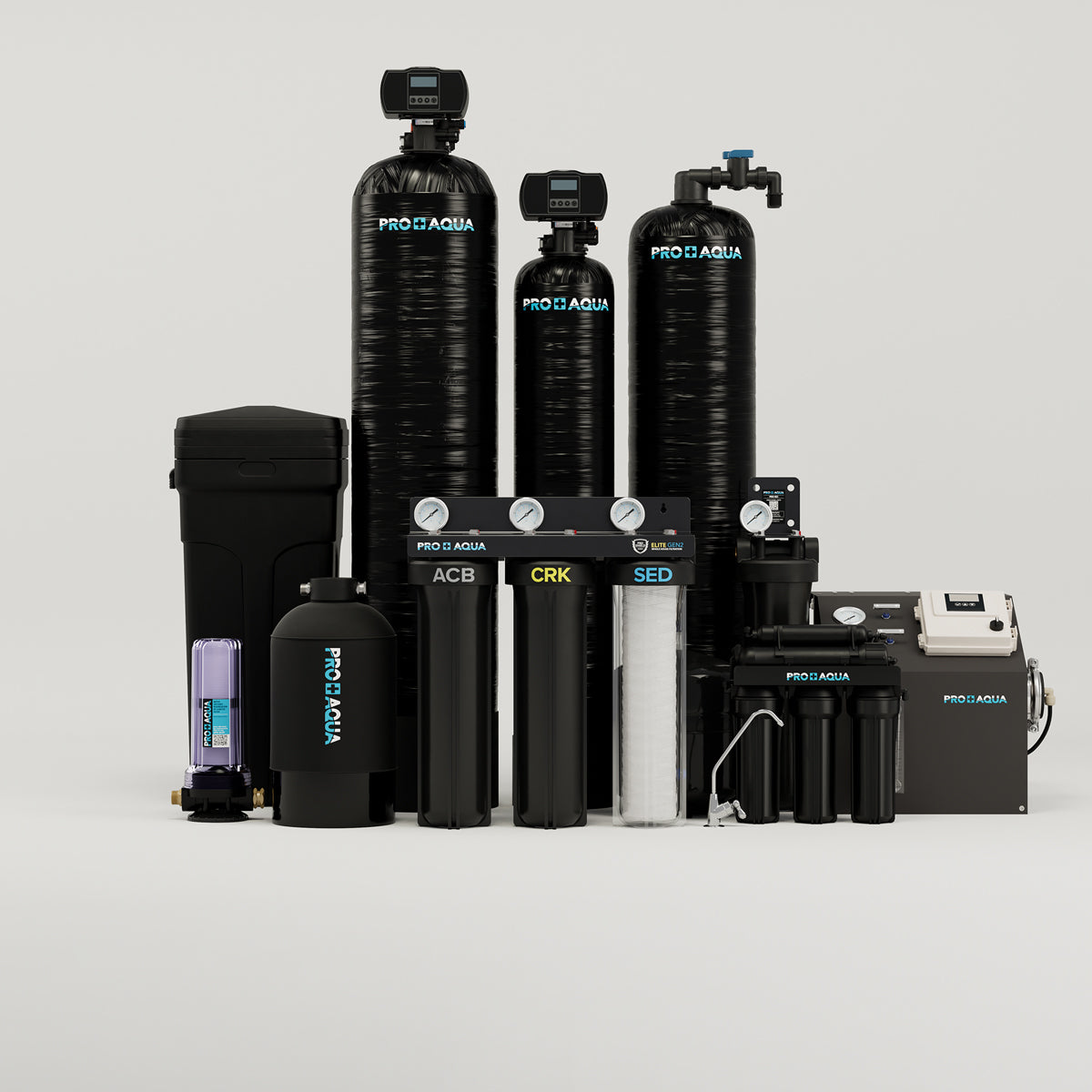


Learning how to filter arsenic from well water starts with a simple fact: this contaminant doesn't behave like sediment, iron, or hardness. Arsenic occurs naturally in certain rock formations and groundwater sources.
It's colorless, odorless, and can sit well above safe levels without giving any hint it's there. The broader lineup of filtration systems for wells still matters here, but arsenic needs treatment built around its own chemistry, not a standard sediment or carbon setup.
Why Arsenic Needs Different Treatment Than Sediment or Iron
Sediment filters trap physical particles. Carbon filters pull out the chemicals behind bad taste and odor. Arsenic slips past both, since it's dissolved at a molecular level rather than sitting in the water as a visible particle or something carbon media was ever built to grab.
That's part of why arsenic tends to blindside well owners more than something like iron or sediment does.
Staining and cloudy water at least give a warning. Arsenic gives nothing. A well can look and taste completely normal and still come back from the lab well above the recommended limit.
Testing: How You Actually Confirm Arsenic Levels
A certified lab test is the only real way to confirm arsenic and its concentration in well water.
Testing here deserves more attention than it gets with some other contaminants, since arsenic levels in groundwater can shift over time with local geology, seasonal changes, and nearby land use.
Whatever the results show should drive the next decision: which treatment approach fits, and how the rest of the filtration system gets built around it.
Two Forms of Arsenic and Why That Matters
Arsenic shows up in groundwater in two main forms: arsenite and arsenate, more commonly called trivalent and pentavalent arsenic. They don't respond to treatment the same way.
Pentavalent arsenic is usually easier to remove with standard methods, while trivalent arsenic typically needs to be oxidized first so filtration can actually capture it.
A lab test that identifies which form, or combination of forms, is present in a given well helps determine whether pretreatment needs to happen before the main filtration stage gets to work.
Reverse Osmosis: The Strongest Home Treatment Option
Reverse osmosis (RO) is widely considered one of the strongest home-based methods for reducing arsenic in drinking water, particularly the pentavalent form.
Our page on reverse osmosis basics walks through how the membrane works, forcing water through a barrier fine enough to block dissolved contaminants that sediment or carbon filtration simply lets through.
RO is usually installed as a point-of-use system for drinking and cooking water specifically, not for every gallon used in the home, since arsenic exposure comes mainly from ingestion rather than from water used in the shower or the washing machine.
Building the System Around It
RO does its best work when it isn't the only thing standing between raw well water and a clean glass.
Sediment and organic material can wear down membrane efficiency and shorten its lifespan considerably, so RO usually gets paired with upstream filtration rather than installed on its own.
The well water filter system: 3-stage whole house covers that upstream step, clearing out sediment and improving overall water quality before it ever reaches the RO stage, so the membrane can focus on the job it's actually built for.
Maintaining an Arsenic Treatment System
Keeping the system performing depends on regular maintenance, especially for the RO membrane and any pretreatment cartridges ahead of it.
Staying on top of how to change a well water filter keeps the sediment and carbon stages from getting overloaded, which protects the RO membrane from wearing out early.
Retesting periodically confirms the system is still doing its job, since a membrane nearing the end of its life can lose effectiveness gradually instead of failing all at once.
Weighing What's Actually at Stake
Arsenic isn't a cosmetic issue the way staining or odor tends to be. Long-term exposure at elevated levels carries real health risks, which puts it in a different category than most of what turns up on a standard well water test.
Treating arsenic properly costs less over the life of a household than the alternative: ongoing exposure to a contaminant that never gives a visible warning.
Confirm the actual levels through testing, build treatment around reverse osmosis and solid upstream filtration, and keep the system on a maintenance schedule that lets it keep doing its job. That's the approach we take with arsenic every time.
PRO+AQUA treats this contaminant with the seriousness it deserves instead of folding it into a generic filtration package.
Reach out to us if your well has tested positive for arsenic and you'd like help building the right treatment plan.



Leave a comment
This site is protected by hCaptcha and the hCaptcha Privacy Policy and Terms of Service apply.