



San Antonio's water quality is shaped largely by groundwater, with most homes drawing water from the Edwards Aquifer.
This water supply is generally dependable and closely regulated, but it is also naturally rich in minerals. Those minerals, and other factors, can influence overall water quality and how water behaves in your home.
If you live in San Antonio and have ever wondered about your tap water, you're not alone. This post takes a closer look at what's in the city's water supply, how it can affect your home and health, and ways to keep your water cleaner.
01 | Who Regulates San Antonio's City's Drinking Water?

San Antonio's tap water doesn't come from a single decision-maker. Its quality is shaped by multiple layers of oversight, each responsible for a different part of what reaches your home. Knowing who's involved and what role they play helps explain how water quality can affect your home and health.
Federal, state, and local rules influence the quality of San Antonio's tap water. It must follow strict guidelines, but its quality van vary. Regulation comes from three levels, each with a defined role:
- Federal: The Environmental Protection Agency (EPA) enforces the Safe Drinking Water Act, setting national limits for regulated water contaminants and treatment standards.
- State: The Texas Commission on Environmental Quality (TCEQ) adopts and enforces federal rules while adding state-level monitoring and compliance requirements.
- Local: The San Antonio Water System (SAWS) treats, tests, and delivers water drawn primarily from the Edwards Aquifer, publishing annual quality reports and managing day-to-day performance.
But here's the key takeaway: not every regulated contaminant's Maximum Contaminant Level (MCL) reflects the level many health experts consider safe. San Antonio's water meets legal standards, but compliance doesn't guarantee pristine quality at the tap.
02 | Where Does San Antonio Get Its Water?

San Antonio's water supply is centralized rather than fragmented across multiple sources. Nearly all city drinking water comes from the Edwards Aquifer, one of the most productive groundwater systems in the U.S.
The aquifer supplies water to more than two million people across the region and is managed under strict withdrawal limits by the Edwards Aquifer Authority. Water is pumped, disinfected, and distributed by the San Antonio Water System (SAWS), with little surface water blending (the mixing from rivers or reservoirs) compared to other major cities.
Groundwater has advantages. It's naturally filtered through limestone and offers a stable supply. Before reaching homes, San Antonio's groundwater is disinfected and monitored by SAWS using treatment steps appropriate for aquifer-based water systems.
Even with this treatment, the water retains naturally occurring calcium and magnesium. That mineral content defines San Antonio's water and can have direct effects on plumbing, appliances, and long-term system performance.
03 | San Antonio's Annual Water Quality Report

San Antonio's 2025 annual report shows what is in the water and how it's treated to ensure it's safe to drink.
Residents can see exactly which contaminants are present and at what levels. The table below gives a clear snapshot of these results, showing both the reliability of the system and the protection it provides.
Select 2025 Findings (San Antonio Water System)
|
Contaminant |
Detected Level |
MCL (Legal Limit) |
Health Concern |
|
Total Trihalomethanes (TTHMs) |
33 ppb (annual average) |
80 ppb |
Disinfection by-products associated with increased cancer risk from long-term exposure |
|
Haloacetic Acids (HAA5) |
8 ppb (annual average) |
60 ppb |
Disinfection by-products linked to cancer and developmental risks |
|
Nitrate (as Nitrogen) |
2 ppm |
10 ppm |
Elevated levels may affect thyroid function and infant health |
|
Barium |
0.112 ppm |
2 ppm |
Potential cardiovascular and kidney effects at higher exposure levels |
|
Lead (90th percentile) |
1.6 ppb |
15 ppb (action level) |
Neurological effects, especially harmful to infants and young children |
|
Fluoride |
0.4 ppm |
4.0 ppm |
Excess exposure may contribute to dental or skeletal fluorosis |
|
Uranium |
1.7 µg/L |
30 µg/L |
Long-term exposure may increase risk of kidney toxicity |
The report emphasizes an important distinction: meeting water quality standards does not mean there are no contaminants, only that levels remain within regulated safety limits.
04 | What the EWG Found in San Antonio's Water

The 2025 Water Quality Report for San Antonio reflects testing conducted in 2024. The Environmental Working Group's data draws on the most recent results available, highlighting key contaminants that exceeded their health-based guidelines. While most contaminants remain below federal limits, some traces of disinfection byproducts and chemicals were detected.
San Antonio's official water quality report indicates compliance with federal standards. But an independent analysis by the Environmental Working Group highlights contaminants present at levels above EWG's health-based guidelines.
Highlighted Contaminants in San Antonio Water Exceeding EWG Guidelines (2025 Report, 2024 Data, TX0150018)
San Antonio's water report shows 38 total contaminants were detected, and 15 of those exceeded the EWG's health-based guidelines.
|
Contaminant |
Detected Level |
EWG Guideline |
Exceed by |
Health Concern |
|
Bromochloroacetic acid |
2.12 ppb |
0.02 ppb |
106× |
Byproduct of chlorination linked to increased cancer risk |
|
Bromodichloromethane |
4.42 ppb |
0.06 ppb |
74× |
Disinfection byproduct with potential cancer effects |
|
Bromoform |
2.95 ppb |
0.50 ppb |
5.9× |
Disinfection byproduct with potential reproductive effects |
|
Chloroform |
2.82 ppb |
0.40 ppb |
7× |
Disinfection byproduct with possible cancer risk |
|
Chromium (hexavalent) |
0.136 ppb |
0.02 ppb |
6.8× |
Known carcinogen, may affect reproductive health |
|
Dibromoacetic acid |
2.41 ppb |
0.03 ppb |
80× |
Halogenated acid linked to cancer risk |
|
Dibromochloromethane |
5.55 ppb |
0.10 ppb |
55× |
Disinfection byproduct with possible health effects |
|
Dichloroacetic acid |
2.05 ppb |
0.20 ppb |
10× |
Halogenated acid with potential liver and developmental effects |
|
Haloacetic acids (HAA5) |
5.76 ppb |
0.10 ppb |
58× |
Group of disinfection byproducts possibly linked to cancer |
This does not mean the water violates any laws. San Antonio's water meets all federal and state standards. The EWG applies stricter guidelines, and its numbers reflect potential risks from long-term exposure, not immediate danger.
05 | Top Contaminants Threatening San Antonio Water Quality

The data highlight several contaminants of concern for long-term health:
- Bromodichloromethane: Forms when chlorine interacts with organic matter; linked to increased cancer risk.
- Chlorofoam: A disinfection byproduct with potential liver and cellular effects over time.
- Hexavalent Chromium: A toxic heavy metal and known carcinogen, harmful even at very low levels.
- Haloacetic acids (HAA5): Byproducts of disinfection that can exceed health-based thresholds, posing chronic exposure risks.
- Bromiated acids: Trace chemicals from water treatment that sometimes surpass EWG guidelines, signaling residual risk.
Although federal regulations classify these levels as safe, several exceeded EWG health recommendations, reminding residents that legal limits do not always equal ideal protection.
06 | Health Risks of Contaminants in San Antonio Water

Exposure to certain containments over time can pose health risks, even when water meets federal safety standards. Understanding these risks helps residents see how water quality connects directly to long-term protection and performance.
|
Health Concern |
Associated Contaminants |
|
Increased cancer risk |
Bromodichloromethane, Chloroform, Hexavalent Chromium, Haloacetic acids |
|
Liver and kidney effects |
Chloroform, Dichloroacetic acid |
|
Reproductive and developmental harm |
Hexavalent Chromium, Brominated acids |
|
Cellular and DNA damage |
Haloacetic acids, Bromochloroacetic acid |
|
Long-term chronic exposure concerns |
Disinfection byproducts (DBPs), Brominated acids |
Recent local news shows why many San Antonio homeowners stay mindful of water quality. In 2025, E. coli was detected in a raw water well but was addressed before reaching customers, according to News 4 San Antonio, while proposed developments like Guajolote Ranch have raised concerns about long-term impacts to the Edwards Aquifer, reported by KSAT. Although San Antonio's water meets federal standards, SAWS notes that long-term exposure to certain contaminants can still be a concern, which is why some homeowners choose additional filtration for added peace of mind.
These health risks are tied to long-term exposure, not immediate danger; especially for children, the elderly, and individuals with weakened immune systems. These groups are more vulnerable because their bodies are less able to fight off infections or cope with harmful substances in water. Over time, consistent contact is what matters most, which is why understanding water quality plays an important role in long-term health.
07 | Lead Found in San Antonio's Schools: Progress & Remaining Risks

Lead has emerged as a documented water-quality concern in San Antonio schools, particularly in older buildings where plumbing fixtures can leach lead into drinking water. Testing conducted through the Texas Commission on Environmental Quality's Lead Testing in School and Child Care Program found detectable lead at many San Antonio Independent School District (SAISD) campuses. In some cases, levels exceeded the U.S. Environmental Protection Agency's action level of 15 parts per billion (ppb).
An analysis by Environmental Texas found that 100% of SAISD schools tested had at least one outlet with detectable lead. At Highland Park Elementary, two drinking fountains tested at 685 ppb and 277 ppb, among the highest levels reported in the district. Sampling focused on drinking fountains and kitchen taps used for drinking and food preparation.
SAISD began voluntary testing in 2022 and has said fixtures exceeding action levels are shut off while mitigation steps are considered. However, a KSAT Investigates report found elevated lead levels across multiple campuses, raising concerns about the pace and consistency of long-term fixes. The reporting highlighted how aging infrastructure and stagnant water can continue to pose risks even after initial responses.
Health authorities emphasize that no level of lead exposure is considered safe for children. Continued testing, fixture replacement, and transparent reporting remain essential to long-term student safety.
08 | Treating San Antonio Drinking Water at Home with Pro+Aqua
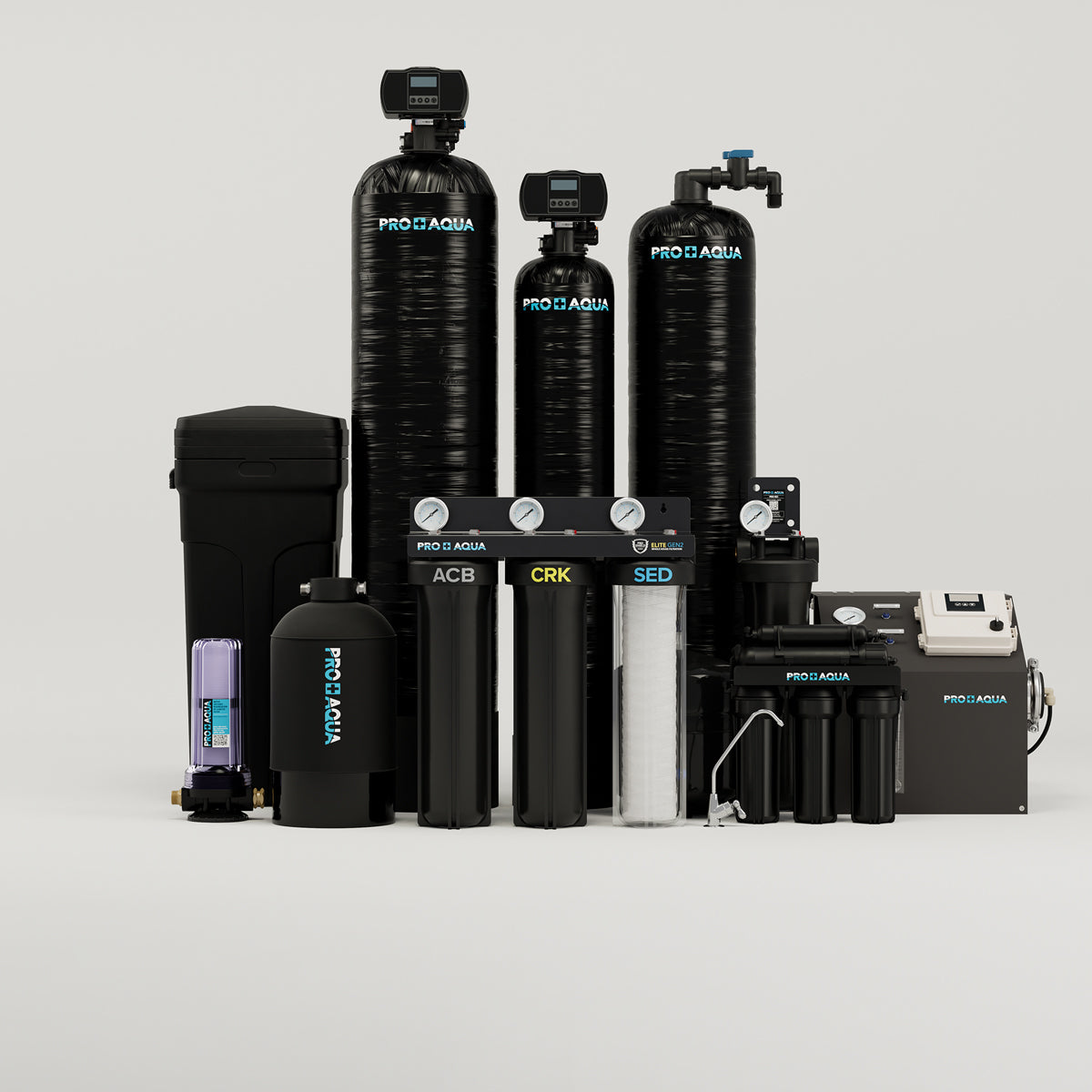
Whole-Home Water Protection: Filtration & Softening Made Simple

Showing PRO-E-S45E
Signs You Need It: If you see hard water spots on dishes, mineral buildup on faucets, or dry skin after showering, your home may have hard water. Hard water minerals like magnesium and calcium can cause scale buildup, reducing the efficiency of plumbing and appliances over time.
Featured System: This two-in-one system combines the Pro+Aqua PRO-100-E Whole House Water Filter + 45,000 Grain Softener Bundle with a 45,000-grain high-efficiency water softener system to protect your entire home.
How It Works: The filtration removes chlorine, iron, sulfur, lead, VOCs, and sediment, while the softener eliminates calcium and magnesium. Together, they protect your plumbing, appliances, and improve water for drinking, cooking, and daily household needs.
You Get:
- Whole-home coverage with filtration and softening
- High-efficiency softener resin to treat hard water
- 3-stage water filtration system removes up to 99% of contaminants
- Smart digital valve optimizes salt and water use
- Protects plumbing and appliances, extending their lifespan
Why It Matters: The PRO-E-S45E system delivers complete water protection. It removes most harmful contaminants while providing soft, balanced water at every faucet, shower, and appliance. With this system, your home gets safe, clean water you can trust for drinking, cooking, and everyday use.
Pure Water at Your Tap: 5-Stage Reverse Osmosis (RO) System

Showing PRO-UC-ROSTD-T6
Signs You Need It: If your drinking water tastes off, has lingering odors, or you're concerned about lead, chlorine, or other contaminants, a reverse osmosis system provided added protection.
Featured System: The Pro+Aqua 100 GPD 5-Stage RO System is perfect for households that want pure, high-quality water without relying on bottled alternatives. It's especially helpful in homes with older pipes or municipal water that may carry residual treatment chemicals.
How It Works: This system removes up to 99% of contaminants, including chlorine, lead, VOCs, and sediment. Its 5-stage filtration process combines sediment, carbon, and reverse osmosis membranes to deliver water that's ideal for drinking, cooking, and daily household needs. The fast-flow 6-gallon storage tank ensures you always have purified water on demand.
You Get:
- Up to 100 gallons per day of purified water for medium to large households
- 5-stage filtration removes the finest impurities
- Fast-flow connectors for higher water output
- Compact under-counter design fits neatly beneath sinks
- Connects to appliances like refrigerators, coffee machines, and ice makers
- High-capacity 6-gallon storage tank for continuous water availability
Why It Matters: The Pro+Aqua 5-Stage RO System delivers safe, crisp water directly at your tap, protecting your family from chemicals and improving taste for every beverage and meal. Together with a whole-home system, it gives you complete confidence in the water you use and drink every day.
09 | How to Test San Antonio Water in Your Home

For real peace of mind, don't rely on citywide reports alone. Test the water coming from your own tap and retest periodically. Water quality can change with the seasons, plumbing conditions, or other environmental factors.
Testing Resources for San Antonio Residents
- Contact San Antonio 311 or SAWS to ask about available water testing resources and guidance.
- Request or schedule lead testing, particularly if your home was built before 1986 or has older fixtures.
- Consider home water testing to check for chlorine, lead, hardness, pH, and other common contaminants.
At-home testing provides a clear snapshot of your water between official reports. It helps you understand what you are actually drinking and supports informed decisions about protection and treatment.
10 | Should You Use In-Home Water Filters in San Antonio?

The answer is yes. Even though San Antonio's tap water meets safety standards, many homeowners choose in-home water filters to reduce specific contaminants like lead, PFAS, or chlorine. Certified filters that meet NSF / ANSI standards are tested to ensure they perform as claimed, giving you confidence in your water quality.
Filters can improve taste and provide an extra layer of protection, but performance depends on selecting the right system and maintaining it properly.
For reliable filtration and softening solutions built for home protection, Pro+Aqua is the go-to source.
11 | Solutions for Improving San Antonio City Water Quality

Hard water can cause scale, lower water pressure, and wear down appliances. Pro+Aqua systems control mineral-heavy water, protecting plumbing and keeping performance consistent.
Ways to improve water quality in San Antonio:
- Install a whole-home filtration system to reduce common contaminants.
- Use a reverse osmosis system for clean, safe drinking water.
- Add a water softener to prevent scale buildup.
- Stay informed with SAWS water quality updates and EPA guidance.
With the right system in place, your plumbing lasts longer, appliances run cleaner, and your water stays clean, clear, and reliable.
FAQs
Is drinking tap water in San Antonio considered safe?
Yes. San Antonio's tap water meets federal safety standards and is regularly tested. However, meeting legal limits does not always mean water is free from all contaminants.
What are the most common contaminants found in San Antonio water?
Commonly detected contaminants include disinfection byproducts, trace heavy metals, and naturally occurring minerals. Most are present at low levels but many still raise long-term health concerns.
What causes the chlorine taste or smell in San Antonio water?
Chlorine is used to disinfect the water and prevent harmful bacteria. While effective, it can affect taste and odor and contribute to disinfection byproducts.
Can plumbing influence the water quality at home?
Yes. Older pipes, fixtures, and faucets can introduce contaminants like lead, even if the city supply is treated properly. This is why home testing is important.
Is it necessary to test my water if the city does?
Yes. City reports show system-wide averages, not what comes out of your tap. Home testing gives a clearer picture of your personal water quality and helps guide next steps.


Leave a comment
This site is protected by hCaptcha and the hCaptcha Privacy Policy and Terms of Service apply.