



Hard water shows up in ways most people notice long before they understand the cause behind it. Chalky spots on glassware, stiff towels after laundry day, and a slow crust building inside your kettle all trace back to calcium and magnesium in your supply.
When homeowners start comparing options, a water softener system for homes usually splits into two camps: traditional salt-based units and salt-free conditioners. The second group has grown popular fast, thanks to lower upkeep and a gentler footprint on your plumbing and the environment around it.
Before picking a side, it helps to understand what a saltless setup can and cannot do for your water, and where each option pulls ahead.
What Is a Saltless Water Softener and How Does It Work?
A saltless water softener does not remove calcium and magnesium from your water supply. Instead, it changes their structure. Water passes through a tank filled with specialized media, often called TAC, short for Template Assisted Crystallization.
This media triggers hardness minerals to form tiny crystals that stay suspended in the water instead of clinging to pipe walls, faucets, and water heaters. Traditional softening relies on ion exchange, swapping calcium and magnesium for sodium using salt and a brine tank. A saltless unit skips that swap entirely.
There's no salt bag, no brine tank, and in most cases, no power cord required. The unit sits quietly under your utility area, treating water as it flows through, with almost no daily attention needed from your side.
Benefits of Going Saltless
Homeowners lean toward this option for a handful of solid reasons, and most of them come down to simplicity:
- No sodium added to your water, which is important for households watching salt intake or septic systems sensitive to brine discharge
- No electricity needed for most models, so treatment continues during power outages
- Minimal upkeep beyond an occasional filter or media check, with no salt bags to haul or refill
- Beneficial minerals stay in your water instead of getting stripped out, which many people prefer for taste
- No wastewater produced, since there's no regeneration cycle flushing brine down the drain
These points explain why saltless systems draw attention from buyers who want protection without the extra maintenance routine tied to salt-based tanks. For renters, small households, or anyone short on storage space for salt bags, the appeal grows even stronger.
Where Saltless Water Softeners Fall Short
No system solves everything, and saltless conditioners carry a few real limits worth knowing before you buy.
They do not lower total hardness the way a salt-based softener does. A hardness test will still show high numbers even after installation, because the minerals remain in the water, just altered so they resist bonding to surfaces. If a lab report or plumbing warranty needs proof of softened water below a set grain level, a saltless unit won't satisfy that requirement, and this trips up buyers who expected a lower reading.
Performance can also dip at very high hardness levels, generally above 25 grains per gallon. Extremely hard water sources may need a salt-based system or a combination setup to see steady scale control over time.
Saltless conditioners target hardness minerals specifically, too. They do not remove iron, sulfur odor, sediment, or chlorine taste on their own. Homeowners on well water often pair a saltless conditioner with a separate filtration stage to handle those extra contaminants together, since one tank alone won't cover the full list of issues.
Saltless vs. Salt-Based: Which Fits Your Water?
The two technologies solve different problems, so the right pick depends on your water source and priorities. Salt-based softeners remove hardness outright and handle extreme hardness levels with more consistency, but they need regular salt refills, a drain connection, and periodic regeneration cycles that use water.
Saltless conditioners skip all of that upkeep and work well for moderate hardness, though they leave the mineral content in place and won't tackle contaminants beyond scale prevention. Neither option is universally better. The choice comes down to your test results, your household's daily usage, and how much hands-on maintenance you want to take on long-term.
Choosing the Best Water Softener System for Your Home
So how do you land on the best water softener system for your situation? Start with a water test. If your hardness sits in the moderate range and your main goal is scale prevention without the salt routine, a saltless conditioner is a strong pick. If your water tests above 25 grains per gallon, or you're dealing with iron, sulfur, or heavy sediment alongside hardness, a salt-based softener or a bundled system pairing both technologies will serve you better over the long run.
Household size plays a role too. A water softener system for homes with heavy daily water use, several bathrooms, or a well water source, often benefits from combining conditioning with filtration in one setup rather than expecting a single tank to solve everything on its own.
Why Homeowners Choose Pro+Aqua for Softer, Cleaner Water
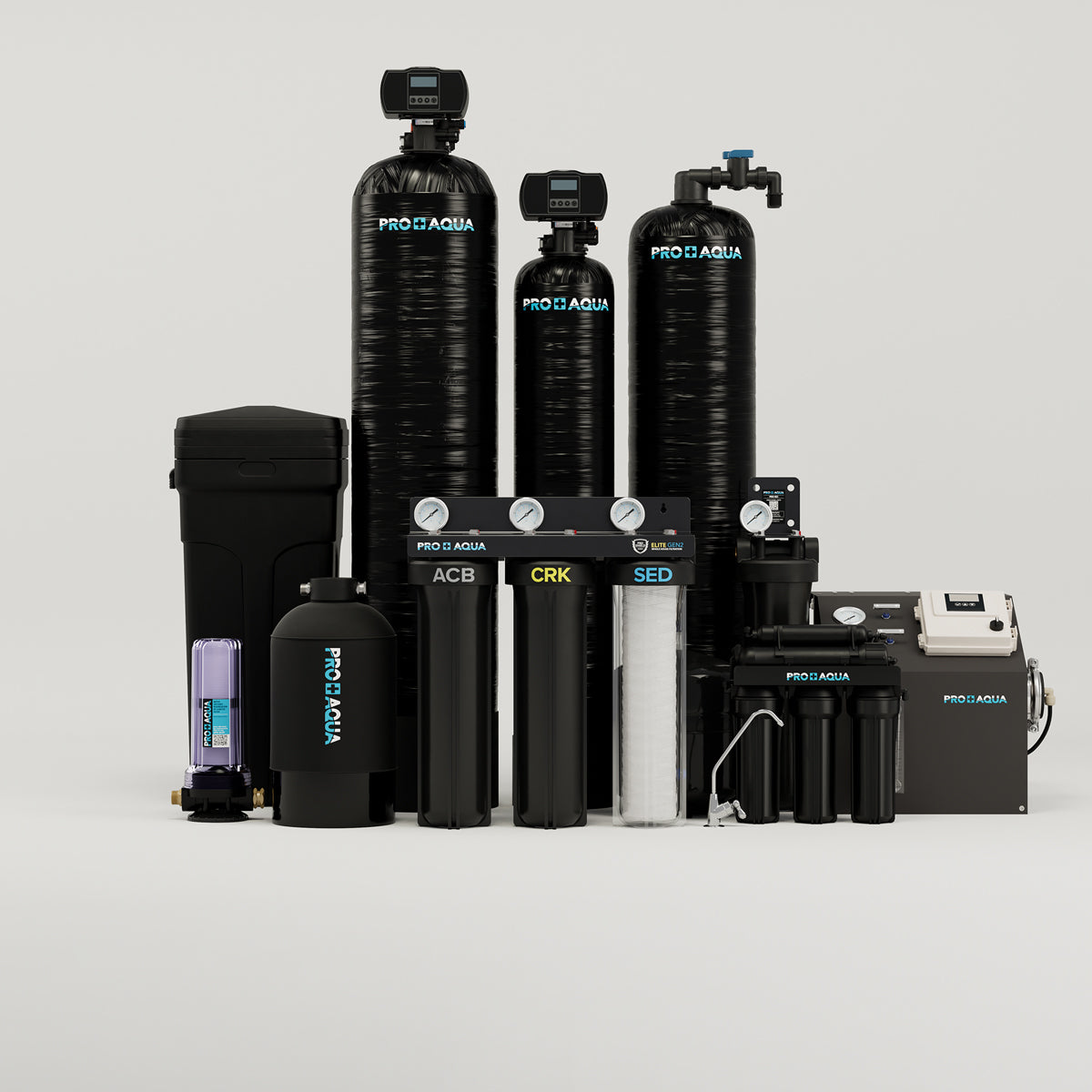
At Pro+Aqua, we build both salt-based and salt-free systems, so you don't have to guess which direction fits your home. Our salt-free conditioners pair with our 3-stage filtration units to tackle hardness, heavy metals, chlorine taste, and odor in one setup, with fittings and flex lines included so installation stays simple.
Every system we ship comes backed by a strong warranty and a support team ready to help with sizing questions, troubleshooting, or your first regeneration cycle. If you lean toward saltless simplicity or full-strength softening, our lineup is built around real households and real water sources, not one-size-fits-all guesses. Browse our Pro+Soft water softener collection today and find the setup built for your water.


Leave a comment
This site is protected by hCaptcha and the hCaptcha Privacy Policy and Terms of Service apply.