

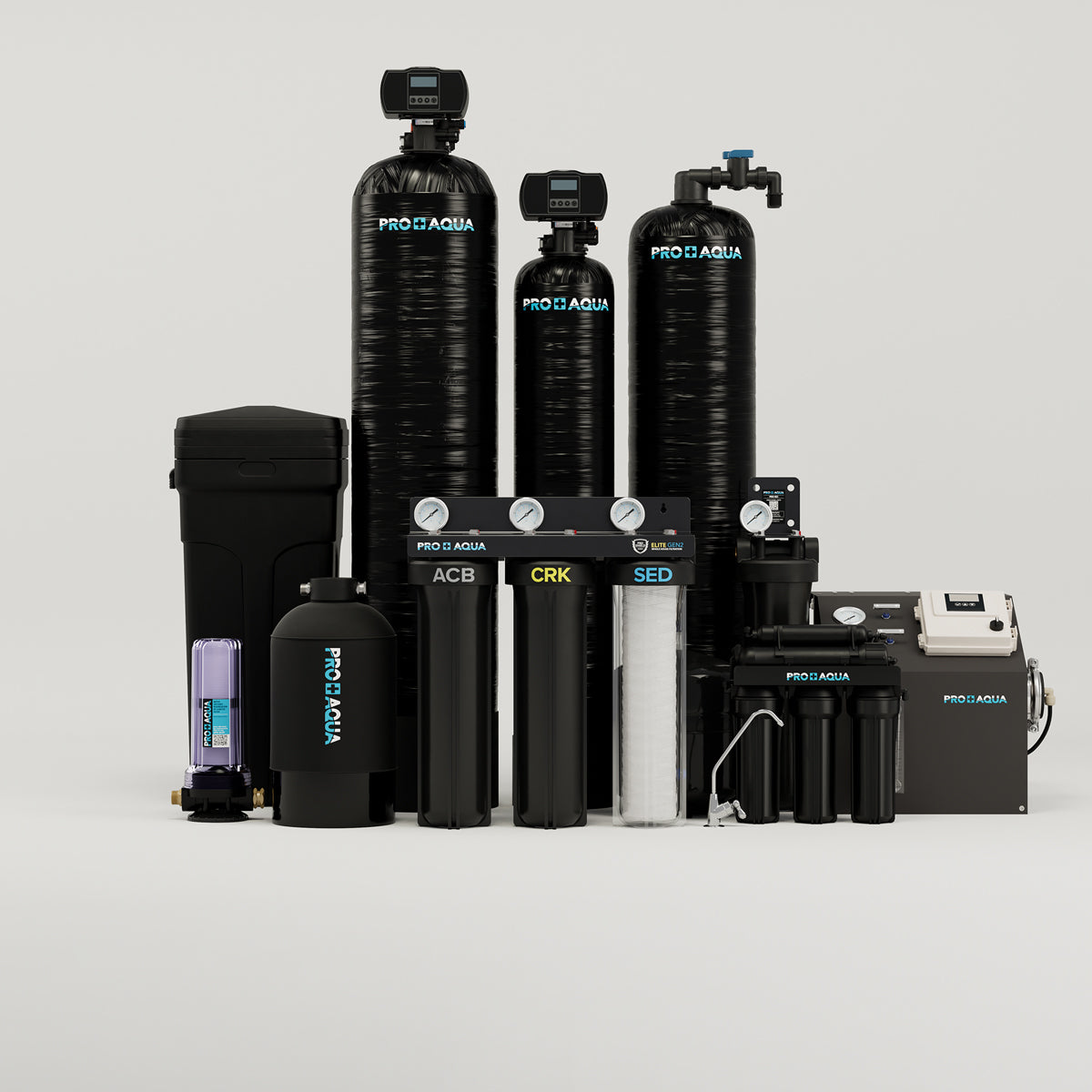

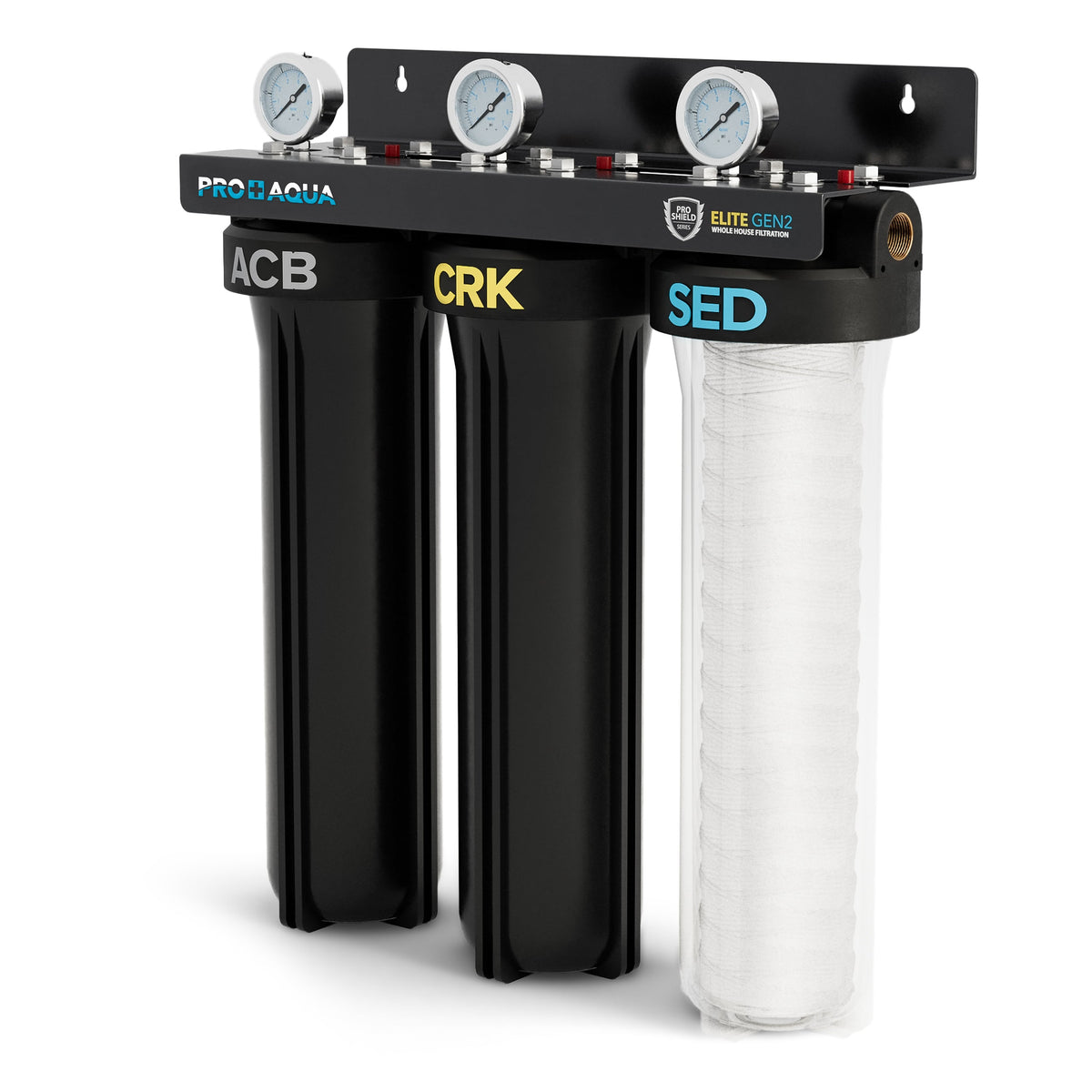
Where to install a sediment filter for well water comes down to one general rule: as close to the point where water enters the home as possible, and ahead of every other treatment stage in the system.
Getting this placement right protects everything that comes after it in the line, from a softener to a reverse osmosis membrane, since none of those components are built to handle raw sediment the way a dedicated filter is.
The broader category of filtration systems for wells is built around this same principle: sediment first, everything else after.
The Standard Placement: Right After the Pressure Tank
In most residential setups, a sediment filter goes in the water line after the pressure tank and before the water splits off toward the water heater, softener, or any other treatment equipment.
This spot catches sediment while water is still under consistent pressure, before it reaches components more sensitive to particle buildup.
Installing a filter before the pressure tank is less common and generally not recommended, since it can interfere with tank performance and complicate pressure switch operation.
Keeping the filter downstream of the tank but upstream of everything else tends to give the most reliable results.
Placement Relative to Other Treatment Stages
Sediment filtration should always sit ahead of iron media, carbon filters, softeners, and reverse osmosis systems in the treatment sequence.
Each of those components performs a more delicate job than straining out particles, and unfiltered sediment shortens their working life considerably if it reaches them first.
A manganese filter for well water, for example, relies on oxidizing media that clogs quickly when sediment gets to it before a proper filter has a chance to catch it.
The same logic applies to iron treatment and softening resin: sediment left untreated at the front of the system creates maintenance problems everywhere else in the line.
Well Water Pump Filter Placement
Some well setups also include a well water pump filter positioned closer to the pump itself, catching larger debris before it ever reaches the pressure tank.
This isn't a replacement for a whole-house sediment filter near the point of entry. It's an additional layer that protects pump components from grit and debris pulled directly from the well.
Homes with wells producing heavy sediment loads sometimes benefit from both: protection at the pump and a dedicated filter closer to the home's main line, each addressing a different stage of the water's path from ground to tap.
Portable Setups: A Different Kind of Placement
Placement questions aren't limited to fixed home installations. RVs, boats, and other mobile setups face the same need for sediment removal but with far less room to work with.
A portable water softener pre-filter regeneration kit solves this by combining pre-filtration with the softening unit itself, installed at the point where water enters the tank rather than somewhere along a longer plumbing run.
Reverse Osmosis Placement Considerations
Reverse osmosis membranes are especially sensitive to sediment, since particles that reach the membrane reduce its lifespan and efficiency far more than they would a simple carbon filter.
Sediment filtration installed ahead of an RO system, whether at the point of entry or immediately before the RO unit itself, extends membrane life substantially.
Our page on reverse osmosis basics covers how the membrane works in more detail, including why upstream filtration plays such a large part in how long an RO system performs before its membrane needs replacing.
Getting Placement Right From the Start
Placement decisions made during initial installation are far easier to correct than ones discovered years later, once pipe runs, fixtures, and other treatment stages are already built around the original layout.
Repositioning a sediment filter after the fact often means cutting into existing plumbing, relocating a pressure tank connection, or reworking how other stages connect into the line, all of which cost more than getting the placement right the first time.
That's why we walk through the full layout of a home's plumbing before recommending where a sediment filter, or any other stage, should go.
A system installed with the right sequence from day one keeps every component working as intended for years, rather than needing costly rework later once a downstream component fails early from unfiltered sediment exposure.
Contact our team if you'd like help mapping out where sediment filtration fits into your specific setup.


Leave a comment
This site is protected by hCaptcha and the hCaptcha Privacy Policy and Terms of Service apply.