



A manganese filter for well water targets one of the least talked about problems in private well systems: dark staining, a metallic taste, and buildup inside pipes and appliances that manganese leaves behind over time.
It behaves a lot like iron chemically, but standard iron treatment doesn't always remove it fully, which is why wells with confirmed manganese need media built specifically for the job.
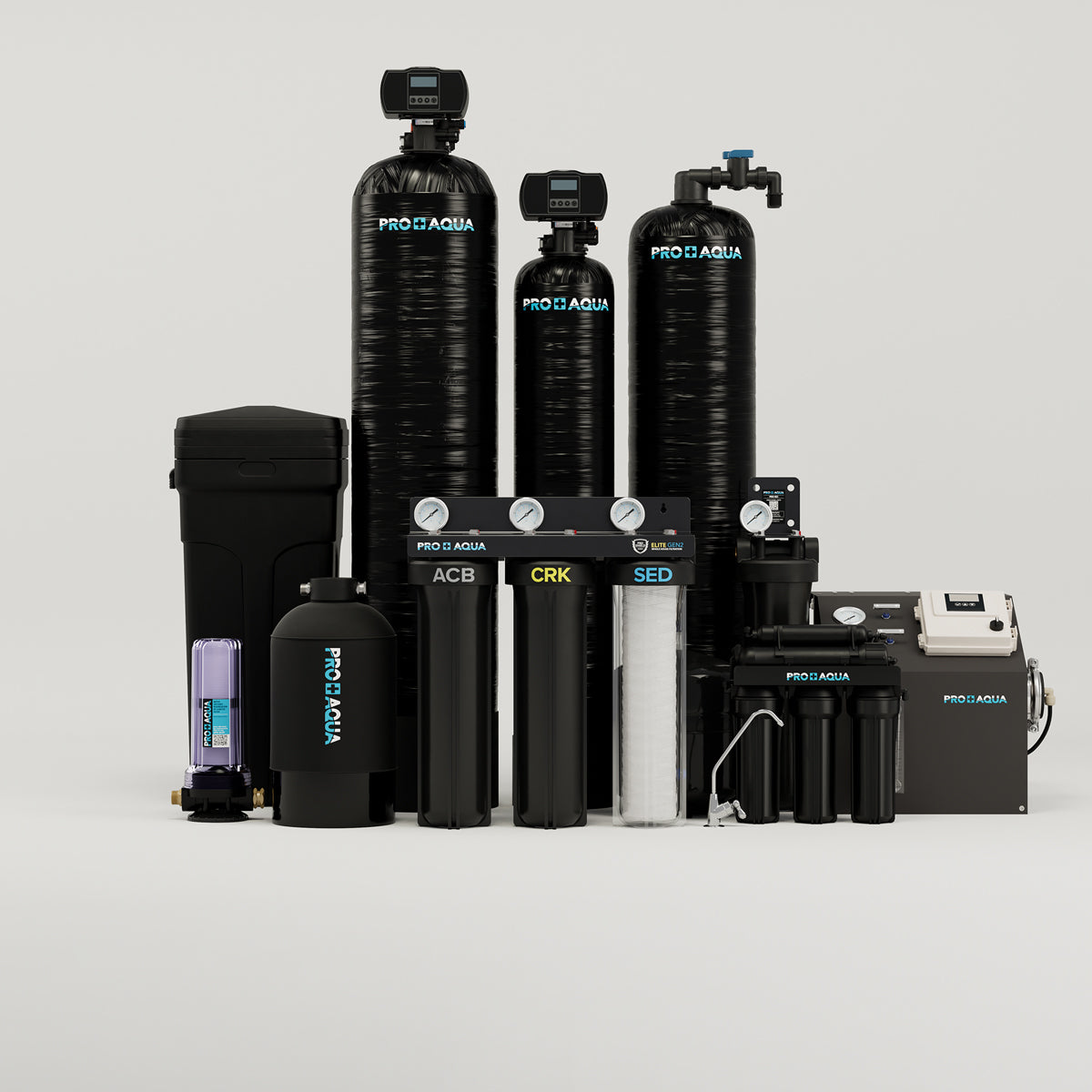
Before we get into manganese on its own, it helps to look at the full range of filtration systems for wells, since manganese seldom shows up as the only contaminant present.
What's Actually in Well Water
Every well is different, but a handful of contaminants show up again and again: sediment from the surrounding soil, dissolved iron and manganese from the bedrock, sulfur gas that produces a rotten egg smell, and hardness minerals like calcium and magnesium.
A water test is the only reliable way to know which of these a specific well is producing, and in what concentration.
Treating one contaminant while ignoring the rest won’t solve the underlying problem. A softener alone won't touch iron staining, a sediment filter won't remove sulfur odor, and a basic carbon filter won't pull manganese out of the water.
Full treatment usually means layering several types of media together, each targeting a different contaminant in sequence.
Manganese: The Overlooked Contaminant
Manganese gets less attention than iron, but it causes similar problems: black or brown staining on fixtures, laundry, and even dishes, along with a bitter taste at higher concentrations. It also builds up inside pipes and water heaters over time, gradually reducing flow and efficiency.
Standard sediment or carbon filters pass manganese right through since it's dissolved rather than suspended as a particle.
Removing it typically requires oxidizing media, filtration designed to convert dissolved manganese into a solid form that can then be physically trapped and flushed out during a regeneration cycle.
Getting this stage sized correctly matters, since undersized manganese media loses effectiveness fast and lets contaminants slip through before a homeowner notices anything wrong.
Building a Full Treatment Approach
For wells producing sediment alongside iron, manganese, or odor, a single-stage filter can’t usually keep up.
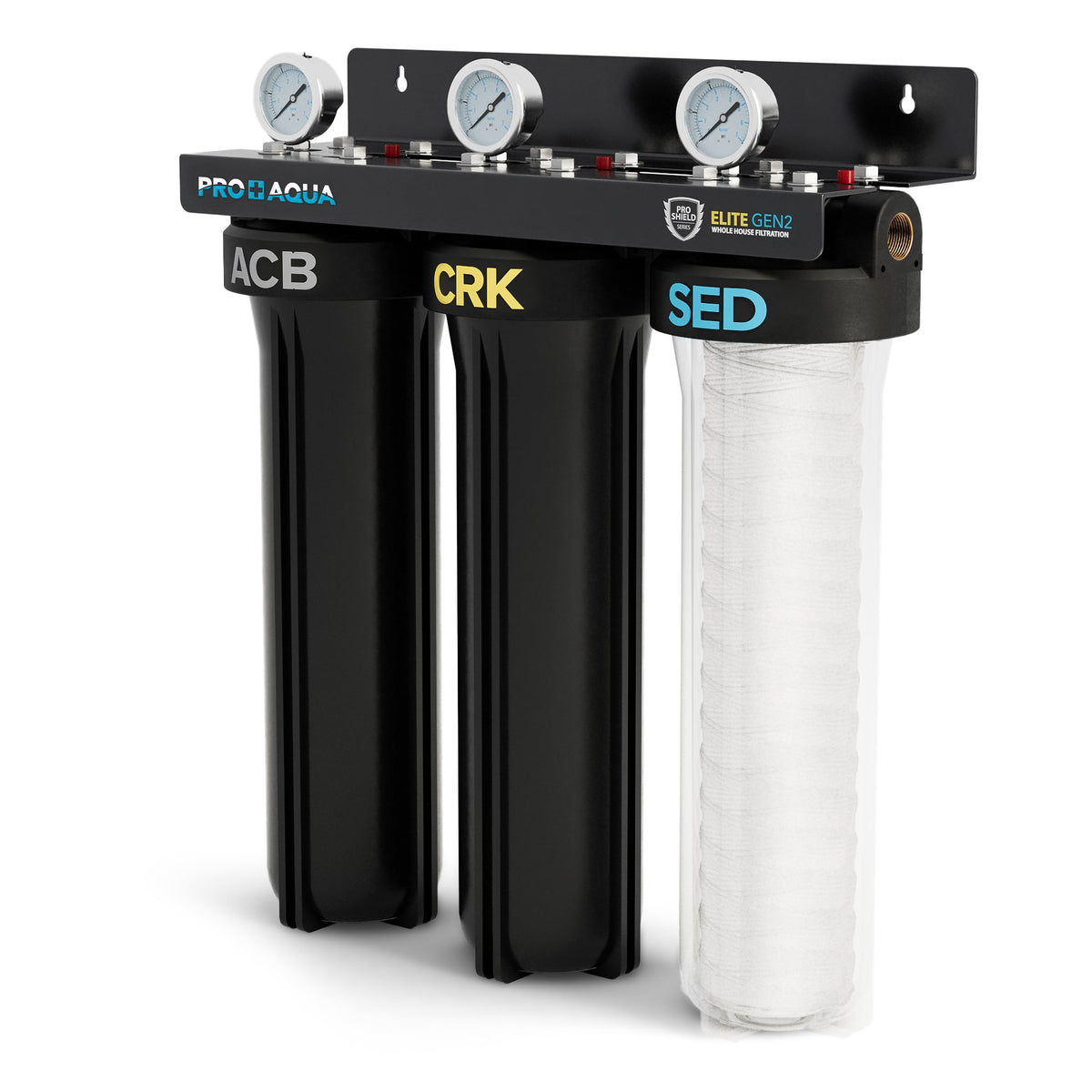
The well water filter system: 3-stage whole house handles this by combining sediment removal, carbon filtration, and a third stage built for additional media, treating water as it enters the home rather than fixture by fixture.
This layered structure matters because each stage protects the ones after it. Sediment removed early keeps the manganese and iron media from clogging prematurely, and carbon filtration handles taste and odor before water reaches the tap.
Skipping a stage to save money upfront usually costs more later, since the remaining stages wear out faster carrying the extra load.
Iron-Specific Needs
Iron and manganese frequently travel together in well water, but a system built for one doesn't automatically catch the other in the concentrations a specific well produces.
Homes with a confirmed iron problem alongside manganese benefit from a well water iron filter: whole house system designed to pull both contaminants out using media suited to each.
Lab results should guide this decision since iron and manganese concentrations differ greatly from one well to the next, even within the same neighborhood.
Shower Filters and Point-of-Use Options
Whole-house treatment handles the bulk of the work, but some homeowners add a point-of-use filter for extra protection where it matters most.
Searches for the best shower head filter for well water with iron come up on a regular basis because iron and manganese residue leaves hair dry and skin irritated even after whole-house treatment reduces the overall load.
A shower filter isn't a substitute for whole-house treatment, but it adds a final layer of protection close to where the water is actually used, catching any residual iron or manganese that made it through earlier stages.
Water Beyond the House
Well water problems aren't limited to a home with a fixed water line. Anyone filling tanks on an RV, boat, or camper faces the same iron, sediment, and taste issues, sometimes from a different source every stop.
A portable water softener pre-filter regeneration kit gives that same layered protection in a compact, regenerable unit, useful for anyone who can't rely on a fixed whole-house system.
The method of filtering iron out of well water on the road looks a lot like the process at home: sediment first, then targeted media for iron and manganese, sized appropriately for the smaller tank and flow rate a portable system handles.
Why Timing Matters More Than People Expect
Manganese and iron don't cause visible problems overnight. Staining builds gradually, pipes narrow a little at a time, and by the time a homeowner notices discoloration or reduced pressure, buildup has often been accumulating for months or longer.
Waiting for visible signs before testing means treating damage that's already been done rather than preventing it in the first place.
That's why we push clients toward testing early rather than after staining shows up on every fixture in the house.
PRO+AQUA sizes manganese, iron, and sediment treatment around actual lab results, not guesswork, and the earlier that testing happens, the less wear accumulates on pipes, appliances, and fixtures before treatment starts working.
A system installed proactively costs less in the long run than one installed after months of untreated buildup.
Please don't hesitate to contact us if you'd like help figuring out what's actually in your well water and which combination of filtration solves it.

Leave a comment
This site is protected by hCaptcha and the hCaptcha Privacy Policy and Terms of Service apply.